Lula Landry’s will
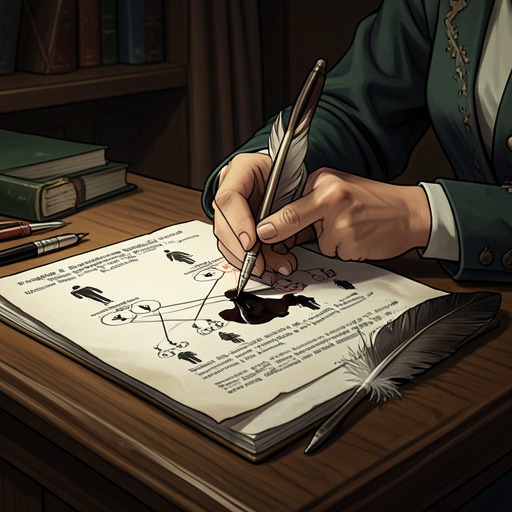
The Cuckoo's CallingLula Landry’s will is a handwritten testament on pale blue paper, witnessed by Rochelle Onifade and concealed beneath the base lining of a white leather handbag. Its discovery confirms Cormoran Strike’s deduction that Lula had visited Vashti to have the document witnessed, and that she intended to leave everything to her brother. The will turns a missing scrap of paper into evidence of deliberate preparation: Lula was making legal arrangements before her death, not writing a suicide note hours in advance and then going out dancing.
The paper and its concealment
The will is written untidily across a folded piece of pale blue paper. Strike finds it inside the white handbag, beneath a stiff, cloth-covered board that holds the bag’s base in shape. The hiding place is not immediately visible: the bag’s lining must be unzipped and the board lifted before the paper appears. The details make the will a literal hidden document, secured within an ordinary possession rather than displayed among papers that might be noticed at once.
The handbag’s interior helps distinguish this hiding place from the bag’s visible design. Its lining is patterned with a stylized African print; beneath that lining, the board conceals the paper. Strike opens the bag carefully, takes out the document, and leaves the lining bundled inside as he restores the bag to the shelf. The will’s concealment is therefore also a practical obstacle in the investigation: it can be found only by looking closely and testing the object’s construction.
A clue to Lula’s visit to Vashti
Before Strike finds the document, he has already treated the blue paper as a significant absence. He recalls that Lula had it before entering Vashti, but that nobody had admitted seeing it afterward. He links the paper to her journey in the car, where she had been writing before she met Rochelle. Those circumstances do not, by themselves, reveal what the paper contained; they leave Strike asking what Lula did with it and why she had been writing.
The visit itself had appeared difficult to explain. Lula brought Rochelle, a penniless and homeless young woman whom she usually gave a lift home in her chauffeur-driven car, across town to Vashti. She took Rochelle into a cubicle, then left fifteen minutes later without taking her home. The abruptness of the encounter invites a dismissive reading of Lula as spoiled. Strike instead reasons that, if she had a purpose for making the visit, its apparent inconsiderateness may conceal a serious intention; if the conduct was out of character, it may reflect an emotional state that needs explaining. He also notes the living witness who said Lula had begged someone over the phone to visit her flat sometime after one in the morning. Together, the missing paper, the unusual meeting with Rochelle, and that late-night appeal make the visit matter to the inquiry.
Strike’s deduction and the will’s meaning
Strike rejects the possibility that the paper was a shopping list and argues that it was not a suicide note: Lula had written it eight hours earlier and then gone dancing. He concludes that she was writing a will and took it into Vashti so that Rochelle could witness it. The conclusion supplies a purpose for the meeting and explains why a young woman who was not known to have seen the paper afterward matters to its recovery.
Strike connects the will to something Lula had told Ciara Porter: that she planned to leave everything to her brother. In his reconstruction, the visit to Vashti was the step that made this intention legal. The will thus joins two previously separate clues—the statement about her intended beneficiary and the blue paper she carried—to establish that inheritance and her brother were on her mind. When asked why she had suddenly made a will, Strike hesitates rather than offering a settled explanation. The evidence supports the fact of preparation and the intended beneficiary, but the immediate reason for the timing remains unresolved in this exchange.
Recovery and confirmation
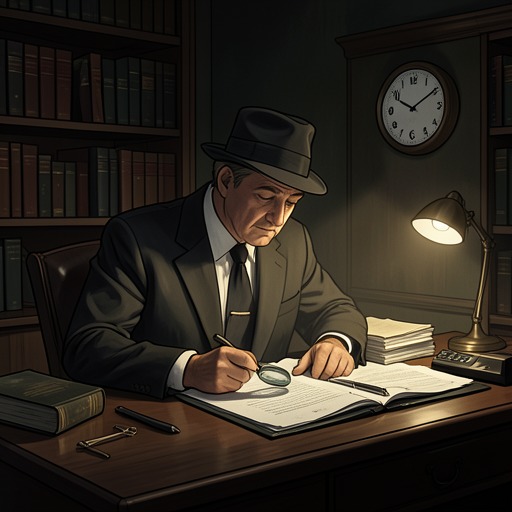
Strike locates the paper while searching the wardrobe in Yvette Bristow’s bedroom. He first checks a new blue bag bearing the GS logo, then turns to the white bag, whose construction matches Ciara’s description. Finding the paper beneath its base board, he puts it into a clear plastic bag without reading it, closes the wardrobe, and continues searching. His handling preserves the document and separates its discovery from the moment he learns what it says.
When movement outside the room alerts him to the Macmillan nurse, Strike returns to the bedroom and says he has opened the wrong door, claiming he thought it was the bathroom. He then reads the will in the small en-suite with the door closed, turning on the taps and flushing the toilet so the nurse will not hear him. The document is on Yvette’s writing paper and bears Rochelle’s witness signature. This private reading confirms the earlier deduction: the missing blue paper was Lula’s last will, and Rochelle had witnessed it. The will’s evidentiary force rests not merely on its contents, but on the chain of circumstances that makes it intelligible—Lula writing in the car, carrying the paper into Vashti, asking Rochelle to witness it, and hiding it in the handbag.